
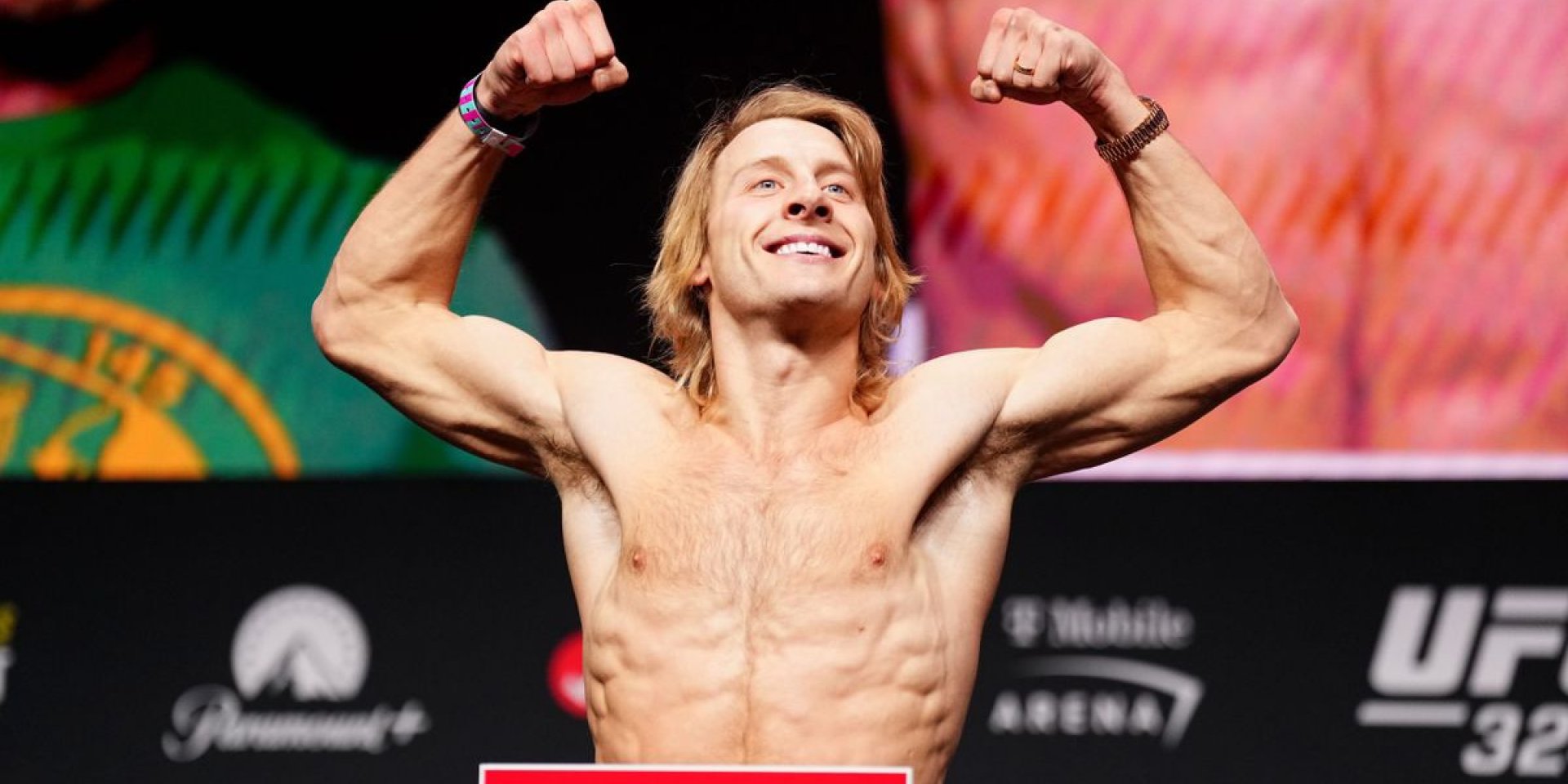
With Paddy Pimblett it’s always the same: half the people watch and say, “Come on, this is a circus,” and the other half say, “Come on, he’s a star.” And the truth, as usual, is somewhere in the middle. And it’s exactly in that “middle” where the UFC lives best.
Because a Gaethje–Pimblett title fight (even for an interim belt) looks weird by sporting logic. Not even “debatable.” Weird. In lightweight there’s a line of guys who have objectively done more and beaten tougher opposition. And when Tsarukyan calls Pimblett’s recent opponents “cans,” it might be rude… but when it’s aimed at Pimblett, for a lot of people it sounds way too convenient.
So here’s the question: is he really a can? Or are we just confusing “inconsistent” with “bad”?
Why people want to write Pimblett off: he looks like a guy who forgets to keep his hands up
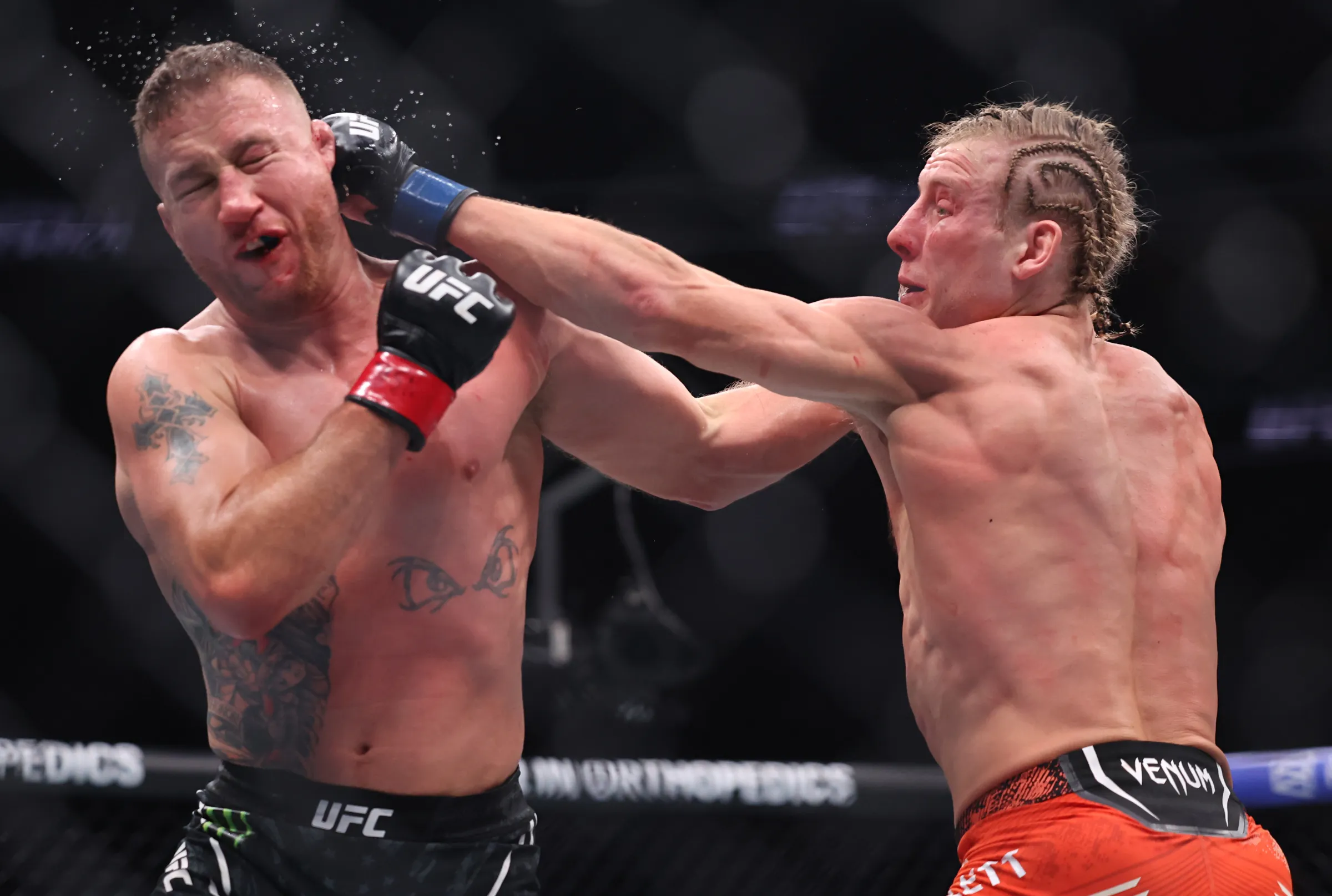
Paddy on the feet isn’t the kind of guy who “came out of a boxing gym and can do everything.” He’s more the kind of guy who fights like the first priority is getting to the ground, and everything else is just noise on the way there.
What works for him
- kicks are his main tool: lead-leg work, rear-leg low kicks, range management;
- in his last fights he added long punches, but he commits so hard that sometimes he literally “falls forward” together with the punch;
- his physical dimensions help: a 185 cm reach and 178 cm height is solid for lightweight—especially when you like to loom over opponents and pressure with combinations.
What doesn’t work (and this is where the “can” meme starts)
- his hands live anywhere except where they’re supposed to be in MMA,
- he offers little body defense, and footwork doesn’t bail him out,
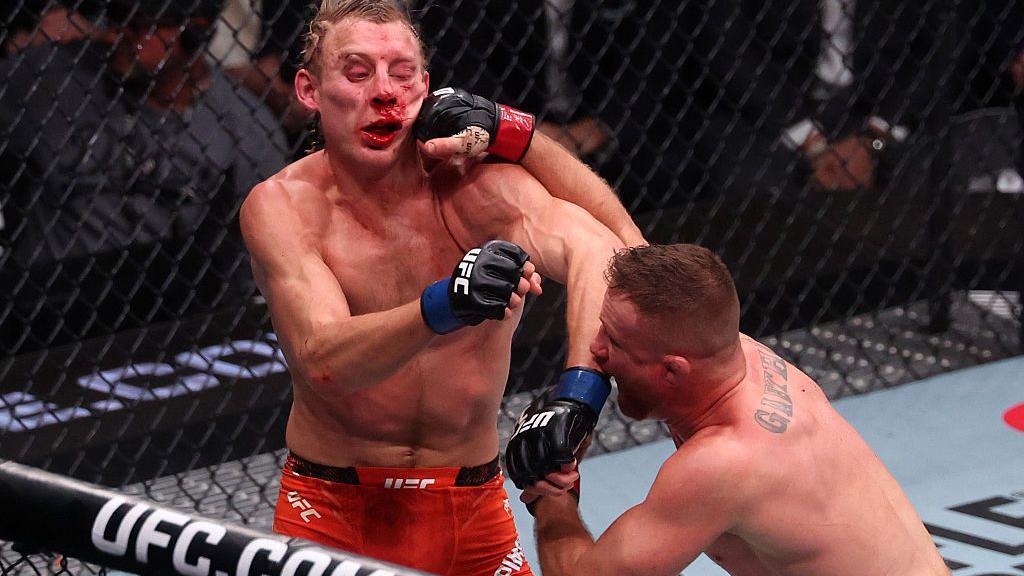
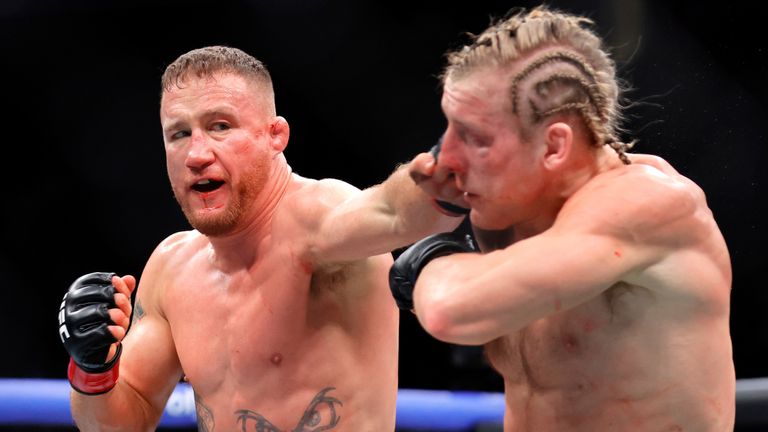
- and when he moves forward, sometimes he does it like he’s putting his chin on display.
The numbers reflect it, too: his striking defense dips (roughly around 42%, meaning he gets hit a lot for a guy who’s aiming for big-name fights). And yes—his accuracy doesn’t look supernatural either: at times he lands on the guard, “creates an impression,” but doesn’t truly break through.
At the same time, this matters: chaos can be a weapon. Pimblett pressures with pace, he has power, he can feel the moment when an opponent starts to wilt, and he’s genuinely pretty good at finishing. It’s not pretty. It’s practical.
Where Pimblett is truly strong: the ground
This is where the jokes stop. His back mount is a miserable place to be.
Pimblett is a top-tier jiu-jitsu guy, and you can see it not from “old highlights,” but from how he runs his positional game right now: calmer, more deliberate, more calculated. He has a favorite story— the rear-naked choke (six career wins by that method)—and he knows how to turn control into a finish without unnecessary chaos.
In the UFC, he has genuinely nice numbers for a jiu-jitsu specialist: he doesn’t just “try to submit you”—he chooses moments when the opponent is already standing awkwardly, already late with their hands, already “a second behind.”
But there’s a nuance that keeps him from being a future dominator
Wrestling ≠ jiu-jitsu.
And it’s specifically wrestling where Pimblett is average. Sometimes even weak.
- his own takedown accuracy is something like 28% (attempts are there, the results aren’t always),
- his takedown defense is around 50% (meaning: you can get through).
Yes, for jiu-jitsu guys that isn’t rare (Oliveira had similar numbers in different stretches), but the difference is that today’s top lightweights aren’t “one-dimensional strikers.” These are guys who strike, wrestle, and don’t give you a free pass to “switch the fight into BJJ mode.”
On top of that, Pimblett’s fence work issue keeps surfacing: you can pin him, you can hang on him, you can take him down. And if you’re not the type who’s scared of his guard, you start feeling more confident than you should.
So, a can or not?
If we’re being short and honest:
He’s not a can
Because a can is someone who can’t do anything except lose in style. Pimblett knows how to win. And most importantly, he knows how to punish mistakes—and in MMA, that’s half the job.
He’s not a “future dominator” yet
Because a lightweight dominator today is a fighter who:
- doesn’t fall apart on the feet,
- can impose wrestling himself instead of waiting for a “gift,”
- and doesn’t depend on whether the opponent is convenient.
Pimblett is too matchup-dependent. And that’s not an insult. It’s a diagnosis of his level.
Why the Gaethje fight looks “right” specifically for Paddy
The paradox is this: a title shot is absurd, but the matchup for Pimblett is logical.
Gaethje can be terrifying on the feet, but on the ground he historically doesn’t look like someone who calmly survives under an elite jiu-jitsu player. And if you take him at his word, he devotes minimal time to grappling (the “10 minutes a week” kind of talk).
So on paper the picture is:
- on the feet, Gaethje’s advantage could be massive,
- on the ground, Pimblett’s advantage could be even more unpleasant.
And that’s exactly why Paddy doesn’t look like a crazy underdog here. He looks like a guy the UFC matched in a way that gives him a real route to a belt.
A final thought, without a moral
Pimblett isn’t a can. But he’s not an “inevitable champion” either.
He’s very specific. Loud. Inconsistent. Dangerous.
An ideal UFC character: strong enough to win, and controversial enough that everyone argues—meaning they watch.
And from here it’s simple: if he truly wants to become not a meme but the elite, he’ll have to do a boring thing.
Learn to defend. And learn to wrestle with the same confidence he has when he chokes people.
Because at lightweight, “half a fighter” isn’t enough anymore.